
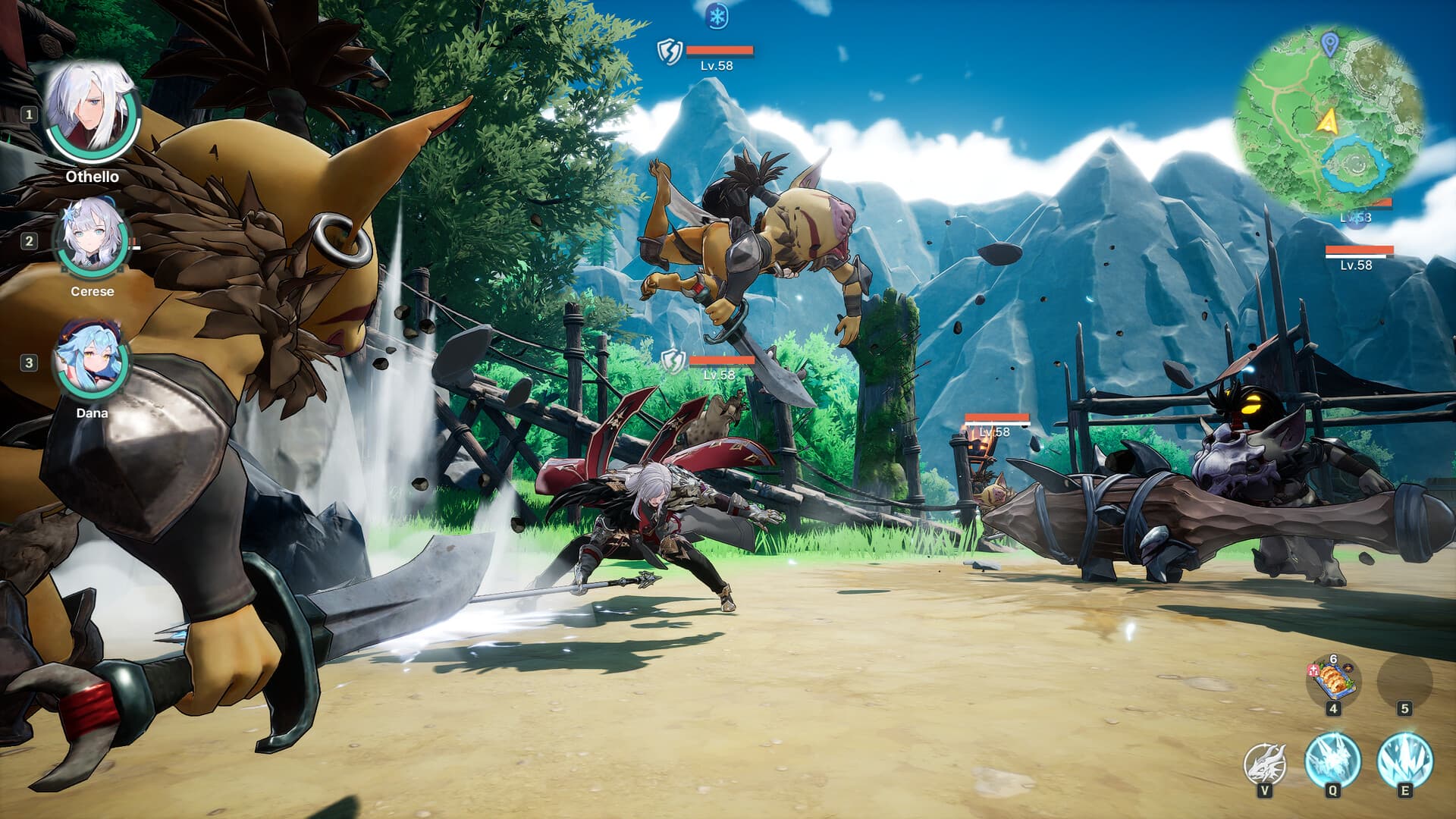
There is no official DragonSword : Awakening tier list, so the rankings below compare two launch-period community methods and keep their disagreements visible. They are useful for choosing characters to test and invest in, but they do not prove fixed damage order or a permanent meta. This snapshot was checked against version 1.0.8 on August 7, 2026. That update fixed combat-state bugs for Sion, Theresia, and Kalsion without announcing numerical balance changes. [S07] [G06] [G07]
Rankings
BiggySweats ranked all 19 launch characters in a video published on July 27, 2026. His S tier contains Lute, Kalsion, Ornette, Dana, Charlotte, and Theresia, while A contains Castella, Roxy, Reina, Cerese, Kalien, Aria, Johnny, and Othello. Alex, Tarte, Sion, and Astria appear in B, with Eileen in C. These are the creator's launch-period placements, not Hound13 labels. [G06]
A separate release-build composite places Charlotte, Roxy, Theresia, and Dana in S. It puts Johnny, Reina, Cerese, and Othello in A, Alex, Eileen, and Kalien in B, and Sion and Tarte in a C or specialist group. Lute, Castella, and Aria sit on a synergy watchlist because an official clip demonstrates their interaction without providing comparable solo testing. Several other characters lack a clean placement, which should not be converted into a low rank. [G07] [S10]
Method
The two sources answer different questions. BiggySweats gives one creator's complete letter ranking, while the release-build article combines a broad early assessment with another creator's endgame route and the official status-chain example. The latter is a practical composite rather than a controlled benchmark. [G06] [G07]
The version banner currently shown on the composite page cannot establish which game build was used for its original tests. Its exact test version is To be confirmed. Both sets of placements should therefore remain launch-period evidence. [G07]
The Ranking Status methodology guide explains why a definitive list requires more evidence. Each hero would need comparable progression, equipment, skill investment, team support, and encounter type. Testing should include repeatable single-target and group encounters, plus survival, control, support value, execution difficulty, and team dependency. A short damage clip or early impression cannot answer all those questions. [G08]
A useful comparison also needs a fixed question. Boss clear speed, safe story progression, group control, and low-investment value are different outcomes. Record one outcome before testing, keep the supporting party stable, and repeat the same encounter enough times to notice failed setups as well as successful bursts. If equipment or team partners change between runs, describe the result as an observation rather than a controlled rank. [G08]
The comparison uses published outcomes without adding a hidden weighted score. It does not estimate damage multipliers or claim equal investment when the sources did not document it. Team fit, player execution, equipment, Karma, enemy behavior, and status resistance can all change practical results. [G07] [G08]
Consensus
The strongest agreement is around Dana, Charlotte, and Theresia. All three occupy the top group in both methods, making them the clearest high-priority candidates in this evidence set without establishing a universal best trio. The release-build composite gives Charlotte the strongest cross-source case because it combines her broad placement with first-investment status in one creator's completed route. That reasoning belongs to the community article rather than Hound13. [G06] [G07]
Dana has two kinds of support in the release-build composite: a high broad placement and a place in the creator-recommended safer ranged team with Cerese and Othello. Theresia receives a high placement from both ranking methods and also appears in community Bleed and Stun teams. Those team recommendations help explain practical use, but they are not equal-investment proof of individual damage. [G07] [G09] [G10]
Johnny, Reina, Cerese, and Othello sit in A in both displayed methods. Alex sits in B in both. This agreement is useful as a launch-period signal, not a guarantee that each character performs identically in bosses, groups, exploration, or low-investment progression. [G06] [G07]
Side by side
| Character group | BiggySweats video | Release-build composite |
|---|---|---|
| Dana, Charlotte, Theresia | S | S |
| Roxy | A | S |
| Johnny, Reina, Cerese, Othello | A | A |
| Alex | B | B |
| Eileen | C | B |
| Sion, Tarte | B | C or specialist |
| Lute | S | Synergy watchlist |
| Castella, Aria | A | Synergy watchlist |
| Kalsion, Ornette | S | No directly comparable placement shown |
The table keeps an omitted placement separate from a low placement. The release-build composite does not give Kalsion and Ornette a directly comparable tier in its short result table, so converting that omission into B or C would be misleading. Its watchlist is also not a tier below B. [G07]
The watchlist identifies heroes with documented team interaction but insufficient comparable solo evidence under that method. Lute, Castella, and Aria therefore remain outside its letter rows for a stated evidence reason. That treatment should not be read as a negative verdict on the trio. [G07] [S10]
The release-build composite reports Charlotte -> Johnny -> Reina as one creator's successful investment order. It also records Cerese + Othello + Dana as that creator's safer ranged route. These examples show that a hero can matter because of progression order, safety, or team interaction even when an isolated letter differs. The arrow is an investment sequence, not a verified combat rotation. [G01] [G07]
Disputes
Roxy moves from A in BiggySweats' ranking to S in the release-build composite, while Eileen moves from C to B. Sion and Tarte move from B to C or specialist status. Lute is S in the video but remains on the composite's synergy watchlist. [G06] [G07]
These are methodological differences rather than noise to average away. Read the reasoning attached to each source and compare its tested context with the team you intend to use. A placement without matching conditions should not override direct results from your own account. [G06] [G07] [G08]
Kalsion and Ornette are especially easy to misrepresent. BiggySweats puts both in S, while the short composite does not provide a comparable placement for either. That is an incomplete comparison rather than evidence that the second source rated them low. Kalsion also received a Royal Flame bug fix in 1.0.8, so older impressions may not exactly match current behavior. [S07] [G06] [G07]
Sion and Theresia also received 1.0.8 fixes, involving Sion's Relic and Theresia's Inquisition state. Hound13 did not describe these as damage buffs. They can affect practical feel, but moving either character solely because of the patch would require fresh comparable testing. [S07]
How to use it
Use the list to create a shortlist, not a shopping order. Pick one candidate, check which Status Ailment the intended team creates, and confirm that the next hero receives a useful Signal opportunity. Test ordinary groups and bosses separately. A coherent A or B team can be more useful than three S-ranked heroes whose triggers do not connect. [S01] [G07]
Record the current version, equipment state, skill investment, Karma, team partners, difficulty, and encounter when comparing results. Keep those conditions stable long enough to compare repeated attempts. After a balance patch or important mechanical fix, treat the old placement as historical until it is checked again. [G08]
Do not describe lower-ranked heroes as unusable. The Ranking Status methodology does not consider the available evidence sufficient for a stable universal ranking, and neither displayed list is official. The supported conclusion is limited to a launch-period comparison: Dana, Charlotte, and Theresia have the clearest high-tier agreement, while disputed placements remain dependent on method and context. [G06] [G07] [G08]