
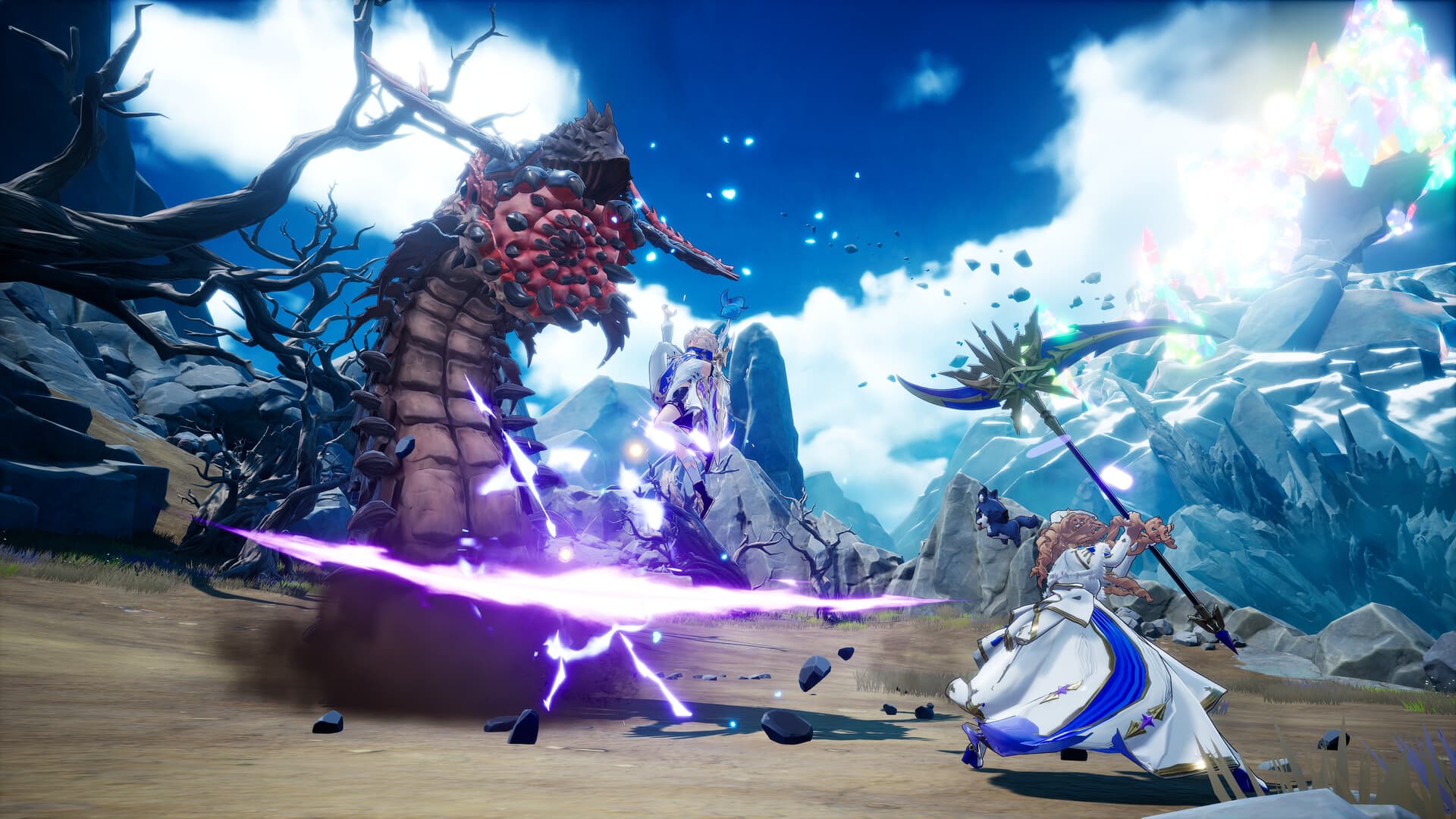
DragonSword : Awakening is easiest to learn when you treat combat, recruitment, and equipment as connected systems. Start with the story, learn how one hero creates a Status Ailment for another hero's Signal Skill, and invest in one functional three-character team before spreading materials across the full roster. All 19 launch heroes are earned through normal progression, so a new player does not need to plan around paid random pulls. Hound13 estimates the main story at roughly 10 to 15 hours, although play style, Hero Quests, and regional Bond Quests can extend that time. [S03] [S05]
Quick start
Follow the tutorial and early story until the main menus, team controls, and first recruitment routes become available. The story is the most reliable opening path because Hound13 says launch characters are either granted directly through quests or assembled with quest materials. The official roadmap calls that material Nameless Souls, while current community recruitment guides use Fate's Invitation for a targeted Exchange route. Their exact relationship is To be confirmed, so the safe beginner conclusion is simply that character acquisition comes from play. [S03] [S05] [G04] [G05]
If the tutorial appears blocked by a fallen tree, stand in front of it, press Interact, and then move forward. The official inputs are F followed by W on keyboard, or Y followed by the left stick on an Xbox controller. This is an official solution to a specific early blocker, not a general instruction to interact with every obstacle in the same way. [S03]
Adventure difficulty increases as your rank rises. Hound13 also says it can be lowered manually, so using that setting is a supported way to keep the story moving. Raise it again when the current team, equipment, and Signal chain feel dependable. [S05]
Combat loop
The core loop is setup, Signal, and switch: Active Skills build a relevant Status Ailment for the party. A compatible Signal Skill then creates the handoff to another hero. Switching at the correct opportunity lets that hero continue the sequence instead of restarting combat with an unrelated kit. The Steam description presents repeated Signal switching as the basis for long combo chains. [S01]
Use the official Lute, Castella, and Aria preview as a study example. It demonstrates that these three heroes can connect status tools through switching, but it does not call them the strongest team. A useful lesson is to watch which condition is being created and which teammate receives a Signal prompt. Copying three highly ranked names without compatible triggers can produce a less reliable party than a lower-ranked group with clear handoffs. [S10] [G07]
Do not confuse a Signal Skill with an equipment stat. Signal belongs to the combat and switching layer. Equipment, Runes, and Karma can strengthen a hero or support a condition, but they do not replace the need to create the correct combat state first. Practice the chain against ordinary enemies before judging it in a boss encounter, where armor, resistance, movement, and interruption can change how consistently the setup works. [S01] [G08]
First team
Build the first team around roles rather than three isolated favorites. Identify the hero who creates the opening condition, the hero who responds through a Signal entry, and the third slot that adds recovery, control, another compatible condition, or safer range. This is a planning framework, not a fixed class system. A hero's value changes with the other two members, the encounter, equipment, Karma, and player execution. [S01] [G08]
One community guide recommends Lute + Theresia + Ornette as a forgiving early foundation, then replacing Ornette with Roxy when the player wants to move toward a Bleed and Stun team. Another community source supports Theresia + Roxy + Lute for general progression. These are attributed launch-period recommendations, not official starter characters or a guaranteed best route. Unlock timing for individual heroes can vary, and exact early availability remains To be confirmed where the source record is incomplete. [G09] [G10]
GameBreakerGod's long-form beginner guide moves from combat and awakening into team selection, equipment, Karma, daily activities, World Bosses, and later Raid preparation. That order is useful for seeing how one experienced player staged the systems across progression. It remains one player's route, so use it as a reference rather than a universal schedule. [G01]
Progression
Keep the first field driver and important Signal partners functional before trying to upgrade everyone equally. Whisper of the House's launch-build gear guide recommends using story and dungeon drops early, completing a useful two-piece effect, and postponing Reforge on items that are likely to be replaced. Its midgame route moves toward a three-piece core plus a useful two-piece bonus and a matching Basic Karma. [G14]
That guide saves deeper Reforge and Exclusive Karma investment until the first team is stable. The sequence is a community resource strategy rather than a Hound13 requirement. If another upgrade removes the immediate progression bottleneck more efficiently, the available evidence does not require following this order exactly. [G14]
Hound13 confirms that all heroes and equipment can be obtained through the story and in-game activities. The official material does not establish one perfect order for Gold, skill materials, Gear, Karma, or Runes. Choose the next upgrade by the bottleneck that prevents the core team from progressing, and label any exact farming priority as community advice. [S04] [G14]
Version 1.0.7 increased Rune inventory capacity from 200 to 500 and made four-star Rune synthesis capable of producing five-star Runes. Those are confirmed system changes. Claims about the best Rune source, perfect stat targets, or a universal set for every hero require separate evidence and should not be treated as beginner facts. [S06]
Exploration
Orbis includes meadows, hidden cellars, deep-sea treasure areas, caves, and dungeons. Exploration also connects to Cooking and collectible Familiars. Ingredients found around the continent can be combined into dishes, while Familiars accompany travel. The store description supports these broad systems but does not provide a complete location or recipe database. [S01]
Use Waypoints and personal map pins to reduce repeated searching. Update 1.0.7 raised the saved World Map pin limit from 100 to 200. Older route guides that still describe a 100-pin ceiling are therefore outdated. [S06]
The campaign is primarily a single-player experience focused on story and exploration. Hunt and Raid provide optional co-op in specific activities rather than shared open-world progression. Cooking, Familiars, caves, and dungeons can therefore be approached as parts of the normal solo exploration loop. [S01] [S04] [S05]
Early mistakes
The first mistake is treating a tier letter as a complete team plan. Community rankings disagree, and reliable comparisons require similar progression, equipment, skill investment, support, and encounter type. Use rankings to identify candidates, then test whether their ailments and Signals connect. [G06] [G07] [G08]
The second mistake is spending long-term resources on temporary equipment. Reforge costs rise when useful lines are protected, and a current item may soon be replaced by story progression. Reserve deep optimization for pieces that fit the intended set structure and remain equipped. This remains community resource advice. [G13] [G14]
The third mistake is turning estimates or disputed terms into promises. The 10 to 15 hour story figure is a developer estimate, while Nameless Souls and Fate's Invitation have not been confirmed as the same item. Exact multiplayer unlock quests, perfect stat targets, and universal best teams are also To be confirmed. Keep a version and source beside recommendations that may change with later updates. [S05] [G04] [G05] [G21]